Shadow AI
Security sees decisions only after they run.
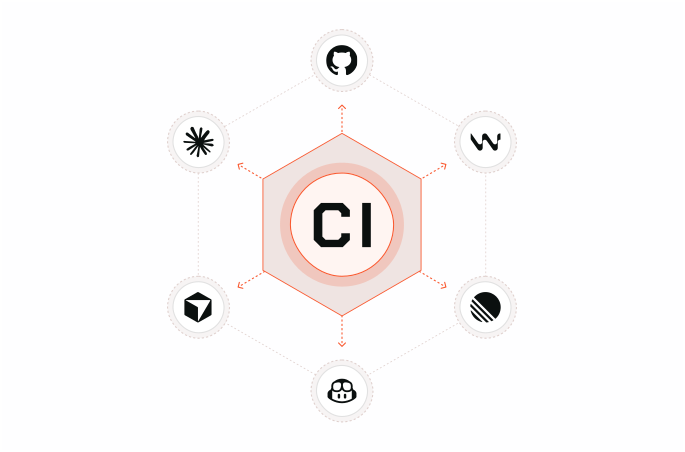
CodeIntegrity sits inside the agent and stops the wrong action before it runs.
All on the device.
Backed by




Security sees decisions only after they run.
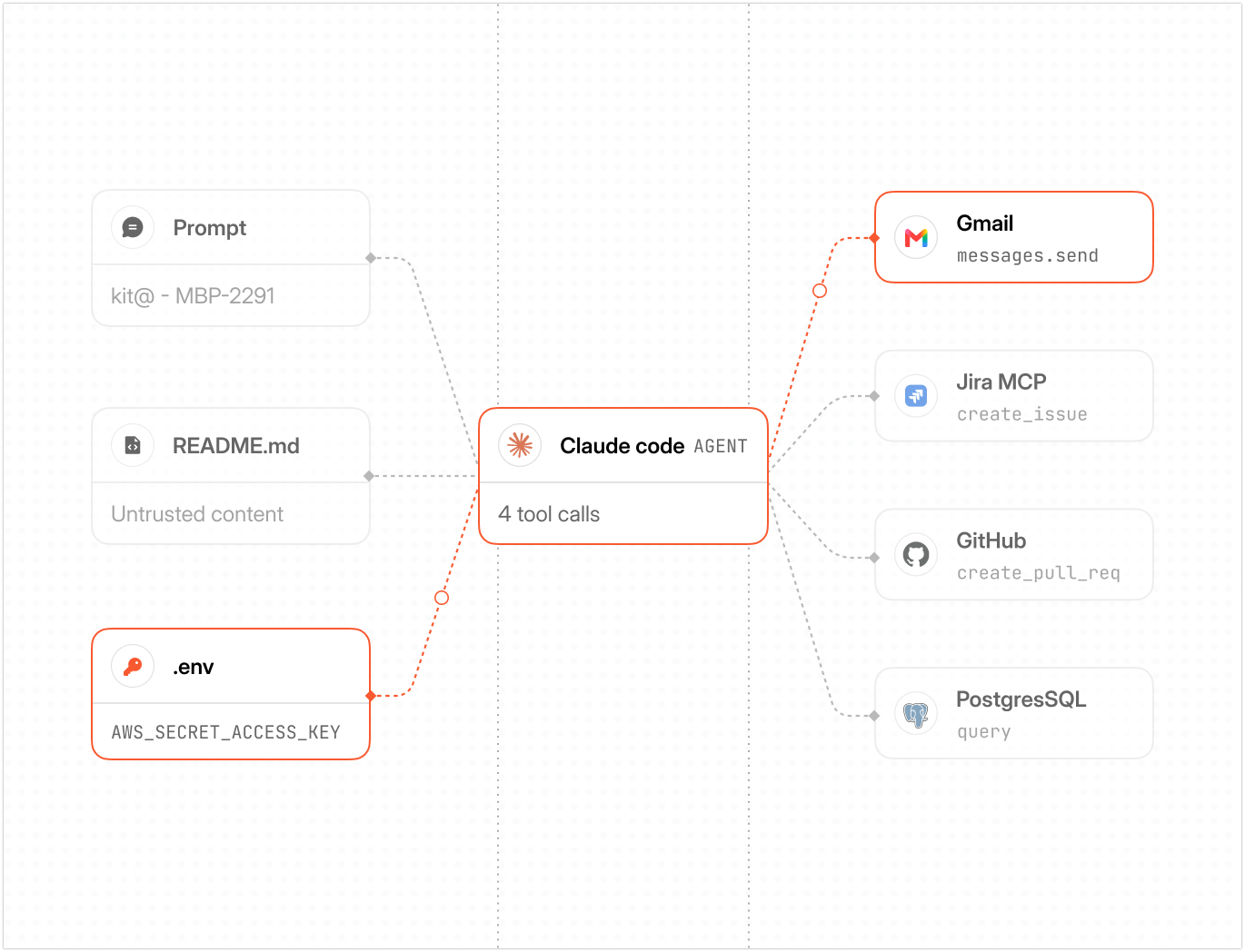
Sensitive data enters tool calls undetected.
Untrusted content redirects the tool path.
Outputs cross systems before controls apply.
See what agents do and stop risky actions before data leaves the device.
Researchers, founders, and our own team on what AI does when nothing checks it at runtime.
Classic prompt injection attack here against Notion: hidden text (white on white) in a PDF which, when processed by Notion, causes their agent to gather confidential data from other pages and append it into a query string that gets passed to their functions_search() tool

👉 Episode 11: Claude Code - Data Exfiltration with DNS 💥 I compromised Claude Code via prompt injection, read sensitive files from the machine, and exfiltrated the data via DNS 😈 🙌 Happy to share this high-severity vulnerability has been fixed!

Sucks for an AI agent to delete the prod DB - with no way to back it up - and risk the complete rental business. But the blame sits with the dev who decided to delegate decision making to the AI agent, and then not review actions, just YOLO it. Time for a blameful postmortem...

Using skip dangerous or yolo mode is still too risky. If you have to maintain an allow or deny list, share it below. I'll go first. Here is what I use in @antigravity. Note: Most agents support an allowlist for which commands to auto-execute and deny list, which follows the same…

An AI agent (Cursor + Claude Opus 4.6) deleted our production database in 9 seconds using a Railway API call with zero confirmation. Then, when asked why, the agent wrote this →

Bad news: Fable nuked my entire dev machine Claude decided to test a sandbox it was building by running `rm -rf` on my home directory The sandbox didn't work. It's all gone

Claude Code wiped our production database with a Terraform command. It took down the DataTalksClub course platform and 2.5 years of submissions: homework, projects, and leaderboards. Automated snapshots were gone too. In the newsletter, I wrote the full timeline + what I…

RT to help Simon raise awareness of prompt injection attacks in LLMs. Feels a bit like the wild west of early computing, with computer viruses (now = malicious prompts hiding in web data/tools), and not well developed defenses (antivirus, or a lot more developed kernel/user…

New Claude Code version just dropped, 2.1.126 --dangerously-skip-permissions looks even riskier now If I’m reading this right, those paths used to be protected even with the flag on Now more than ever, run this in a sandbox, or skip it entirely and use auto mode

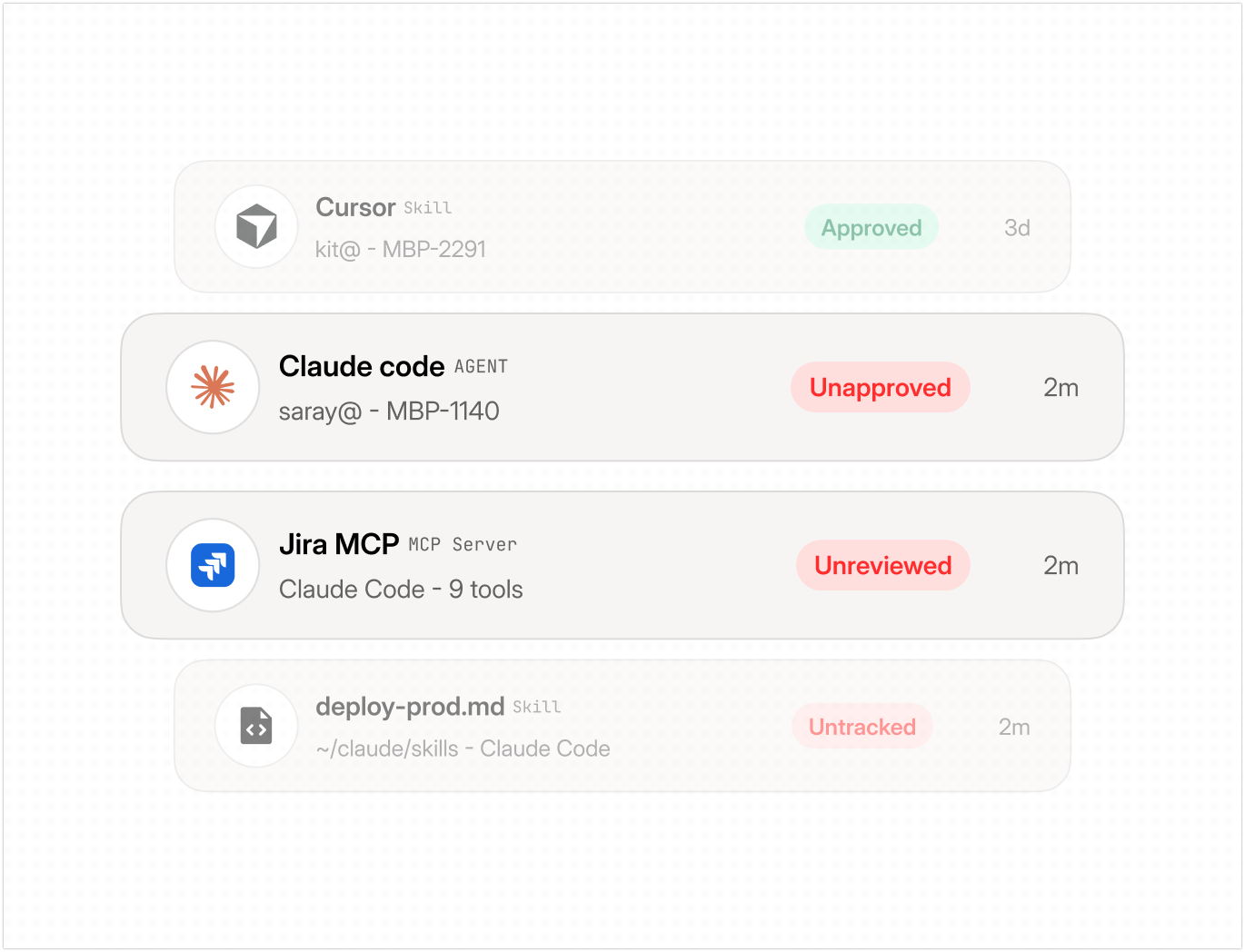
Full visibility into agents and MCP servers, including shadow AI.
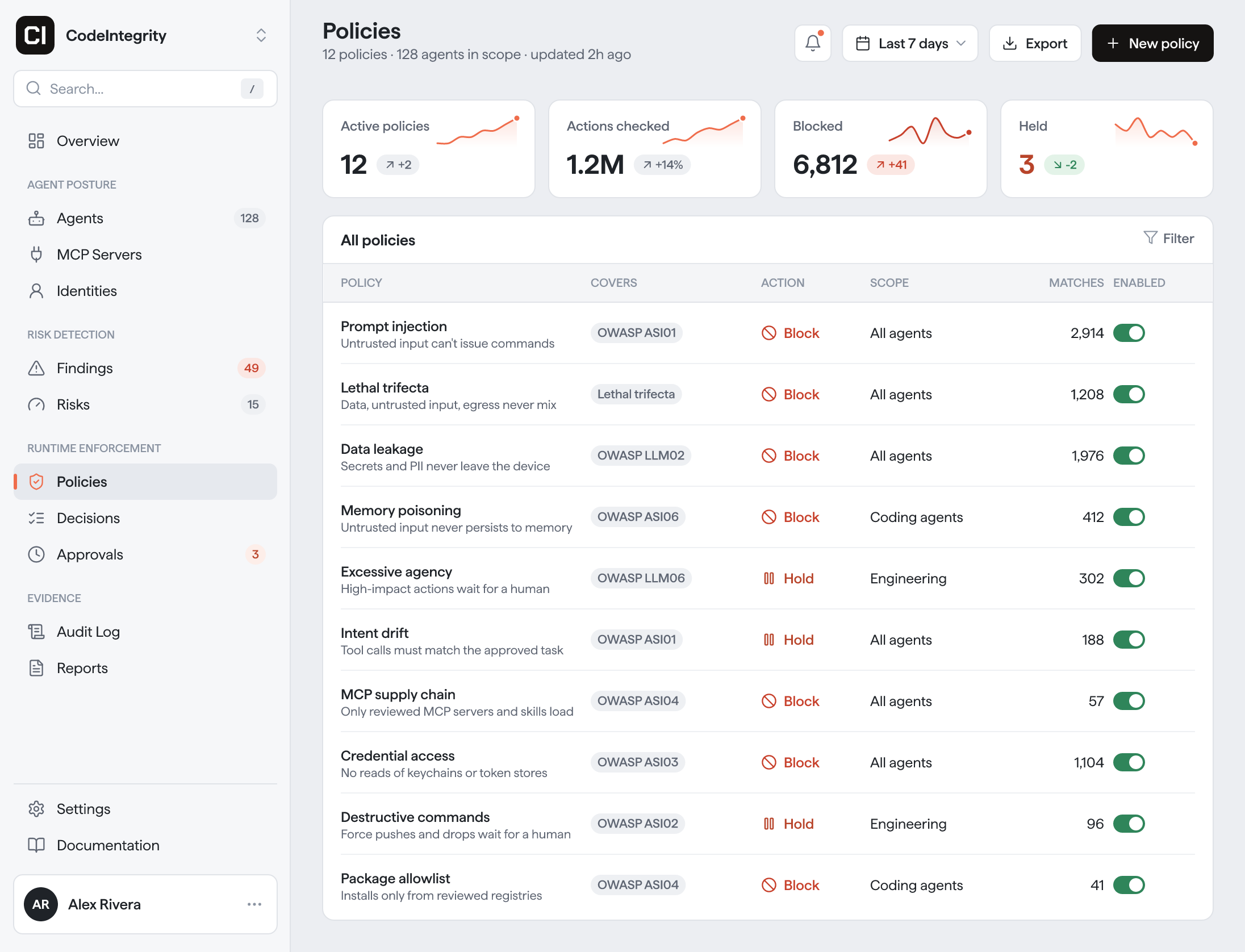
Least privilege for agents. One policy, applied everywhere.
Sensitive actions blocked or approved before they execute.
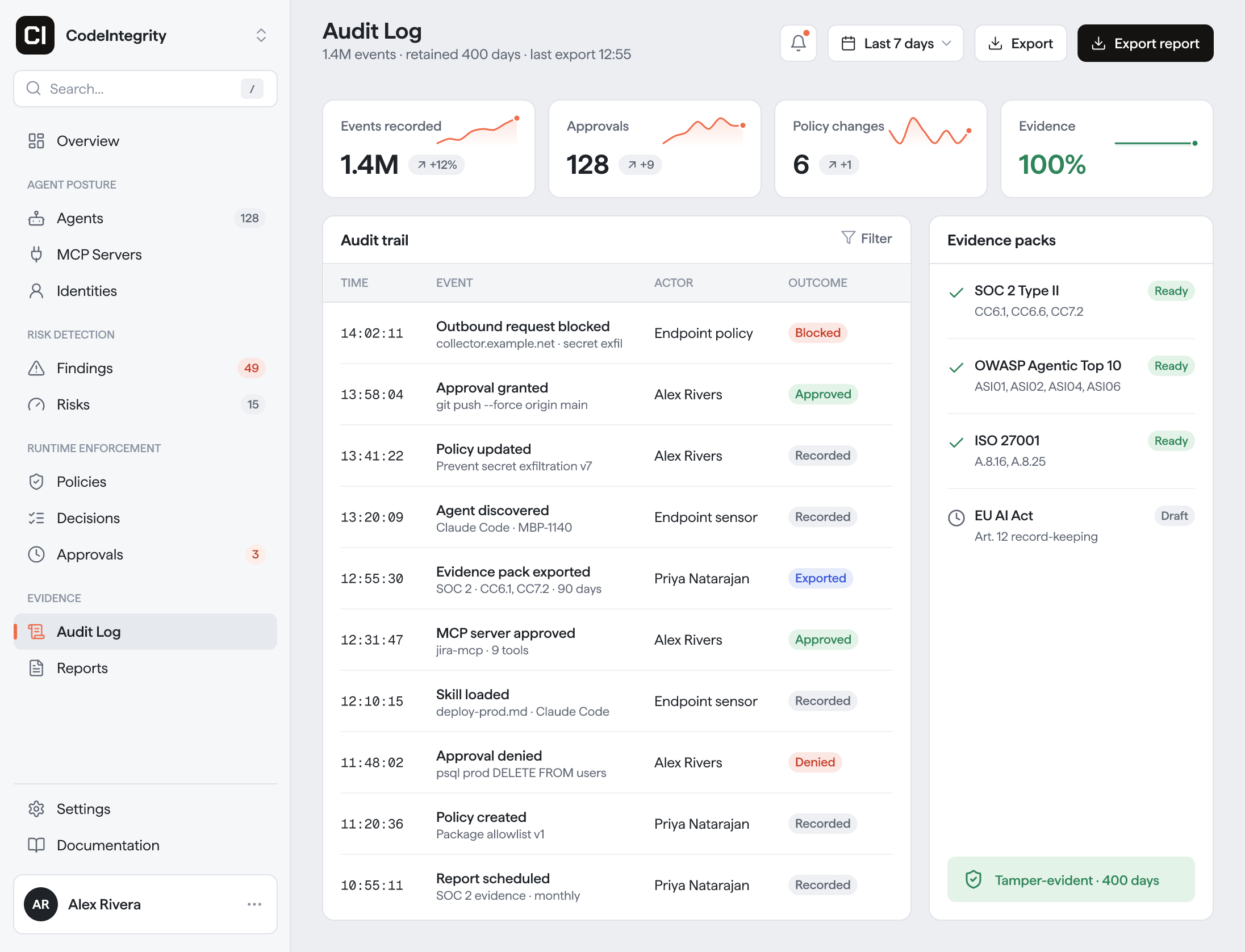
Who, what data, why allowed. A complete audit trail.
Full visibility into agents and MCP servers, including shadow AI.
Runs inside your boundary, ties every agent to an identity, and meets the bar your auditors expect.

Audited controls for protecting customer data and operating the CodeIntegrity platform.

Centralized identity and access controls keep permissions governed and accountability clear across the organization.

Run the whole platform inside your own environment. Agent activity and data never leave your boundary.

Work directly with our team, backed by service-level commitments for critical production deployments.
Deploy every agent you want. Control every action they take. Prove all of it.